阿里云发布了灵骏真武M890超节点实例,首次通过公共云对外提供超节点形态的AI算力服务。

东方甄选发布公告:进一步聚焦产品和品控,2026财年营收和利润增速加快 7月23日,东方甄选发布公告,预期在2026财年(注:2025年6月1日至2026年5月31日),总营收及溢利均实现大幅增长。
1、博鱼app 米兰对里奇的标价是至少2000万欧元,考虑到一年前的购入成本,这个定价相对务实,球员的年龄和意大利国脚身份也保证了一定的市场价值。
据转会专家罗马诺的独家消息,意甲豪门国际米兰已经率先迈出实质性一步,与热刺进行了初步的试探性接触,以了解球员的转会可能性。博鱼app巨头入局,狂欢之后呢 如果说WAIC上的三款产品代表了“创新派”的探索,那么七家厂商端侧AI服务的集中备案,则标志着整个行业进入了“合规落地”的新阶段。
2、台风“红霞”预计在潮州到深圳沿海登陆
2021年夏窗,红黑军团以2850万欧元外加浮动奖金的价格从切尔西正式买断这位英格兰中卫,五年半时间里他累计为球队出战214场,贡献7粒进球,并随队拿下21-22赛季意甲冠军。
3、啤酒再次被关注!医生发现:糖尿病者喝啤酒,不用多久或有5变化
这一局面直接拖慢了米兰的引援节奏,俱乐部原本计划通过出售莱奥回笼资金,以再度投入转会市场,但现在只能被迫暂停引援工作。
4、一家三口长期吃自制饺子,全都确诊胰腺癌,妻子痛哭:是我错了?
算力和融资层面,35亿融资能烧一段时间,但跟大厂比还是小巫见大巫。
5、无论交往多久,如果有这种行为,就是生理性喜欢的证据
变化首先发生在国内市场。
” 04 交卷之日 全球的机器人赛道,抢人为何会到如此疯狂的程度? 因为2015至2016年是大量人民币基金、美国VC基金成立的高峰期,按7到10年存续期算,这批基金在2025到2026年集中进入清算期,他们着急收回钱。
在为数不多的推进目标中,现任奥地利国家队主教练朗尼克成为卡迪纳莱与卡尔韦利最为看好的方案。
6、每天负重“伸展手臂”100次,拜拜肉也消除了,肚子变得紧实了
第二层为待评估球员,包括亚沙里和穆萨,两人需在7月中旬集训开始后,接受阿莫林的直接考察。
Nexfin News — China’s lithium battery industry is undergoing a rite of passage, transitioning from wild expansion to disciplined competition. In the first half of the year, a rare divergence between surging corporate earnings and falling stock prices brought a permanent shift in the sector’s underlying dynamics into sharp focus. By mid-July, A-share lithium battery stocks pulled back despite dramatic midyear earnings forecasts. Tianqi Lithium projected net profit growth of up to 4,935% year-over-year, EVE Energy forecast a 95% to 110% increase, and both Sunwoda and REPT BATTERO turned profitable again. Across the supply chain—from upstream lithium salts to downstream battery makers—most companies reported substantial operational gains. Yet robust earnings failed to stop equity valuations from sliding. On July 8, Chengxin Lithium hit its daily downside limit, Yahua Group dropped over 15%, and Tinci Materials saw more than 30 billion yuan in market value evaporate within a week. Ganfeng Lithium has fallen roughly 38% from its peak, while market leader CATL is down about 20%. The immediate trigger for the selloff was the resumption of operations at CATL’s Jianxiawo lithium mine. On June 29, the mine secured its safety production permit, which was officially posted on the Credit China website on July 7. The site—the world’s largest single lepidolite mine—had been idle for over ten months. With an annual capacity of roughly 100,000 metric tons of lithium carbonate, it previously accounted for 8% to 10% of China’s total output. Its return brings over 45,000 tons of additional supply in the second half of the year, hitting elevated lithium prices head-on. Futures markets reacted instantly: on June 18, as restart speculation grew, the main lithium carbonate contract fell 6.58% in a single session, beginning a steady slide from its May high of 205,000 yuan per ton. This stark contrast between thriving industrial output and falling stock prices coincided on the surface with lithium carbonate pulling back rapidly from its May peak of 200,000 yuan per ton to 151,000 yuan. But a more critical question remains: is this the sign of a cyclical peak, or is the industry undergoing a profound revaluation? Answering that requires stepping back to examine the paradigm shift that unfolded across the lithium battery sector between 2025 and 2026. The essence of this shift is not the fluctuation of any single price signal, but a permanent realignment of the industry's competitive playbook—moving from "who expands the fastest" to "who possesses technology, steady profits, and global compliance capabilities." From 60,000 to 200,000 In late June 2025, battery-grade lithium carbonate dropped below 60,000 yuan per ton, touching a three-year low of 59,900 yuan. Lithium salt producers across the sector incurred heavy losses, forcing widespread shutdowns among small and medium-sized manufacturers. From Australian hard-rock mines and small African projects to domestic lepidolite producers, virtually all marginal capacity went offline that summer. A two-and-a-half-year price slump accomplished its single necessary function: clearing out excess supply. By the fourth quarter of 2025, supply and demand dynamics reversed faster than the market had anticipated. The initial spark came from energy storage demand. Data from research firms including InfoLink show that global energy storage cell shipments reached roughly 610 GWh in 2025, up over 90% year-over-year, with fourth-quarter volumes alone topping 200 GWh. Production schedules showed energy storage cells clearing lithium carbonate inventories at an accelerating quarter-over-quarter pace. As growth in electric vehicle batteries moderated, energy storage stepped in not just to absorb excess capacity, but as the industry's primary growth engine. Surging demand was only half the story; supply contracted just as sharply. Small African mines and high-cost domestic lepidolite operations exited the market. Meanwhile, Zimbabwe announced a temporary suspension of lithium concentrate exports in February—a country that accounted for 15.5% of China’s lithium concentrate imports in 2025. Although Australia remained the primary pillar of China's upstream raw material supply at over 50%, the policy further tightened market expectations surrounding upstream supply. Zimbabwe's Ministry of Mines later confirmed that a formal export ban would take effect in January 2027. The tension between supply and demand peaked with the onset of a structural global deficit. Morgan Stanley estimated in early 2026 that the global market would face a shortfall of roughly 100,000 metric tons of lithium carbonate equivalent (LCE) for the year. Soochow Securities calculated total annual lithium mine supply at approximately 2.14 million tons, representing 440,000 tons of new capacity—most of which was not slated to come online until after the third quarter. That timing gap fueled the price rally during the first half of the year. Driven by these converging forces and inventory restocking across midstream channels, lithium carbonate surged from 70,000 yuan per ton in October 2025 to 200,000 yuan by May 2026. Unlike the speculative frenzy that drove prices to 600,000 yuan in 2022, this recovery occurred after capacity had been fully built out, anchored firmly by real end-user demand. Gaogong Industry Research Institute (GGII) summarized the shift: "This is not a bubble, but a return to fundamental value. The structural surge in energy storage demand, combined with supply-side consolidation, has redefined a rational price band for lithium." Prices doubled quickly due to market sentiment and downstream stockpiling. July’s price correction reflected two main factors: the gradual release of new supply and downstream resistance to inflated raw material costs. Analysts generally expect lithium carbonate to trade within a median range of 120,000 to 160,000 yuan per ton for the full year—a price level that keeps most producers profitable without triggering another round of reckless expansion. Energy Storage as the New Engine In the first half of 2026, China's energy storage battery shipments reached roughly 485 GWh, a year-over-year increase of over 80%. Over the same period, power battery shipments totaled roughly 630 GWh, up over 30%. The gap between the two segments is narrowing rapidly. Structural figures are even more telling. In the first quarter of 2026, Chinese energy storage battery shipments totaled about 209 GWh, up 115% year-over-year and accounting for roughly 40% of total lithium battery shipments. By June, energy storage cells made up nearly 41% of monthly production schedules—up from around 30% a year earlier. According to InfoLink, full-year energy storage cell shipments in 2025 reached roughly 610 GWh, approaching 70% of power battery shipments over the same timeframe. Energy storage is no longer a side business for battery makers; it has emerged as an independent market reshaping demand across the industry. Behind this market realignment lies a fundamental shift in purchasing drivers. Before 2024, domestic energy storage growth was driven primarily by mandatory integration policies, which required wind and solar projects to install storage capacity. That regulatory setup created low-quality demand, leading to poor utilization, weak financial returns, and inconsistent cell quality. Between 2025 and 2026, market dynamics pivoted from regulatory compliance to commercial economics. The shift first materialized in the domestic market. In early 2026, the National Development and Reform Commission and the National Energy Administration jointly issued new capacity pricing regulations (NDRC Pricing [2026] No. 114), establishing a national capacity tariff mechanism for standalone energy storage facilities. Local standards were set between 165 and 330 yuan per kilowatt-year, depending on the province. Surveys by Soochow Securities indicated that internal rates of return (IRR) for storage stations in several provinces crossed the 6% threshold required for commercial viability, especially where peak-to-valley price spreads exceeded 0.3 yuan per kWh. IRRs for top-tier projects reached as high as 10%, fundamentally improving overall demand quality. This domestic turning point coincided with an explosion in international demand. Major solar-plus-storage projects launched across the Middle East, particularly in Saudi Arabia and the United Arab Emirates, with individual project capacities regularly reaching several gigawatt-hours. In emerging markets across Australia, Southeast Asia, and Africa, weak power grids and rising renewable energy penetration transformed energy storage from an optional luxury into a necessity. Soochow Securities calculated that utility-scale storage installations in emerging markets grew 233% year-over-year in 2025, with an additional 69% increase projected for 2026. In Europe, energy security concerns and green energy quotas kept commercial, industrial, and residential demand robust. GGII projects that global energy storage battery shipments in 2026 will reach 800 to 1,100 GWh, representing year-over-year growth of 30% to 70%. Even at the mid-point estimate of 900 GWh, energy storage output is positioned to approach or match power battery production this year. As the industry's primary growth engine shifts, its core operational requirements are evolving as well. Power battery demand is dominated by automakers, whose priority is cost efficiency. The customer base for energy storage, however, is far more diverse: utility operators prioritize long cycle life and safety, data center owners require high discharge rates and extreme reliability, and overseas projects demand lifecycle compliance and supply-chain traceability. Winning in these markets requires technological adaptation, solid project execution, and international compliance capabilities rather than sheer scale. Oversupply or Industry Maturity? Evaluating battery utilization rates requires a closer look at the underlying numbers. In May 2026, the single-month installation rate for Chinese power batteries dropped to roughly 38%. Over the first five months of the year, cumulative power battery installations totaled 259 GWh against 863 GWh produced—yielding an overall utilization rate of about 30%. Factory output continues to outpace vehicle installations, leaving a substantial share of manufacturing lines underutilized. The five-year trajectory of Chinese power battery installation rates tells a clear story: 70% in 2021, 54% in 2022, roughly 52% in 2023, 50% in 2024, 44% in 2025, and 38% by May 2026. This steady decline in installation rates offers clear evidence of an industry transitioning from rapid early growth into maturity. Yet labeling the sector simply as oversupplied misses crucial nuances. The market is not experiencing a uniform glut; rather, it is undergoing sharp structural polarization. High-end shortages coexist alongside low-end surpluses. Demand for premium batteries with energy densities above 160 Wh/kg—primarily ternary chemistries—rebounded sharply, rising from a 6% market share in 2025 to 11%. Meanwhile, low-end products under 125 Wh/kg have effectively been phased out. Demand has also diverged sharply between commercial and passenger vehicles. Driven by subsidy policies, battery demand for electric heavy trucks and delivery vans surged, with battery consumption for electric cargo vans rising 169% year-over-year. By contrast, electric buses—once the industry's primary market—fell to fifth place. While market leadership remains dynamic, the nature of competitive moats is shifting. CATL and BYD together retain a 68% market share, but second-tier players like Gotion High-tech, EVE Energy, Svolt Energy, and Hithium are making gains. Competition is shifting from pure capacity expansion to technological differentiation and operating margins. From another perspective, declining installation rates are a natural hallmark of industry maturity. As annual growth moderates, a drop in capacity utilization from 70% to 40% is to be expected. While systemic capacity pressures continue to weigh on industry-wide profitability, and smaller players face ongoing price competition, market leaders retain the balance sheet strength to navigate the transition. As top-line growth slows, manufacturers lacking proprietary technology, accumulated capital, or global compliance infrastructure risk being squeezed out. This shift explains recent strategic course corrections by major capital allocators. Anode producer Sinomatech canceled a 10.3 billion yuan expansion, cathode supplier Dynanonic abandoned a 10 billion yuan project, and separator manufacturer Semcorp terminated a roughly 2 billion yuan facility in Malaysia. Top-tier players reining in massive investments is a classic sign of an industry transitioning from early expansion to financial discipline. This reallocation of capital does not mean expansion has halted entirely. In the first half of 2026, manufacturers announced over 65 new planned projects representing more than 1,500 GWh of capacity and over 220 billion yuan in total investment. Hunan Yuneng disclosed a 24 billion yuan expansion, while Yahua Group announced additional capacity in Zimbabwe. Expansion continues, but the prerequisites have changed: only enterprises with strong technical barriers, cash reserves, and global compliance infrastructure are positioned to invest while competitors scale back. Technology Race 2.0: Three Fronts If the period between 2022 and 2024 was defined by a race for manufacturing scale, 2025 and 2026 have marked a pivot toward technological differentiation across three distinct fronts. Front One: Structural Shortages in 314Ah Cells The central operational focus for the energy storage supply chain in 2026 has been a structural shortage of 314Ah cells rather than short-term price swings in raw lithium. By March, average spot prices for 314Ah cells from tier-one manufacturers approached 0.40 yuan per Wh, with small-lot orders reaching 0.45 yuan per Wh—a surge of over 25% within six months compared to the 0.30 to 0.34 yuan per Wh seen in August 2025. The immediate driver was rising raw lithium costs—at 180,000 yuan per ton of lithium carbonate, theoretical cell production costs sit between 0.35 and 0.38 yuan per Wh. However, the root cause was a supply gap during the industry's transition to larger formats. As manufacturers shift from 280Ah and 314Ah form factors toward 500Ah+ designs, investment in legacy 314Ah production lines has largely ceased. Because next-generation 500Ah+ cell capacity will not scale up until late 2026, production ramps and customer testing created a temporary bottleneck. During this supply gap, the deficit widened significantly, pushing delivery timelines for select orders into 2027. This dynamic reflects a clear shift in industry economics: market returns are no longer guaranteed simply by bringing capacity online, but by executing format transitions ahead of competitors. CATL has already deployed its 587Ah cell in a 2.4 GWh standalone storage project in Inner Mongolia, while EVE Energy has accelerated mass production of its 628Ah format. With the shift toward larger cell formats underway, manufacturing execution is everything. While 314Ah supply constraints present an immediate operational challenge, solid-state technology represents the long-term competitive battlefield. Front Two: A Return to Realism in Solid-State Batteries Although 2026 has been touted as the inaugural year for commercial solid-state battery deployment, that label requires qualification: current production consists almost entirely of semi-solid (hybrid liquid-solid) chemistries. Models including the NIO ET9, MG4, GAC Hyper, and Chery vehicles have entered the market equipped with semi-solid packs featuring energy densities between 350 and 400 Wh/kg. Because these designs remain compatible with over 90% of existing liquid battery production lines, retooling costs remain manageable and rollout schedules are accelerating. However, the commercial reality of all-solid-state technology remains far more complex than vehicle showroom specifications suggest. In March 2026, Ouyang Minggao, an academician at the Chinese Academy of Sciences, offered a candid assessment: "To be prudent, it is best not to commercialize all-solid-state battery vehicles over the next two years." He cited three major technical hurdles: solid-solid interface stability, where microscopic gaps between solid electrolytes and electrodes cause internal resistance to spike; lithium dendrite formation and safety risks; and the environmental volatility of sulfide electrolytes, which decompose upon exposure to moisture and demand strict manufacturing conditions. Industry leaders report steady if measured progress. CATL’s sulfide-based solid-state cell has surpassed an energy density of 500 Wh/kg, with small-scale production anticipated in 2027. BYD’s 20 GWh facility in Chongqing is scheduled to begin semi-solid production in the third quarter of 2026, targeting pilot runs for all-solid-state cells in 2027. Gotion High-tech plans to initiate operations on a 2 GWh solid-state line by late 2026, while EVE Energy has produced sample 60Ah solid-state cells. A clear timeline has taken shape: 2026 is focused on pilot line verification, 2027 on vehicle testing, and 2030 on potential large-scale commercialization. The implementation of recommended national standard GB/T 43568-2026 (Solid-State Batteries for Electric Vehicles) on July 1, 2026, established an initial regulatory framework for long-term development. Ultimately, 2026 marks less the mass adoption of solid-state technology than a recalibration of market expectations. Meanwhile, an underappreciated demand driver is quietly gathering momentum. Front Three: AIDC Storage as AI Infrastructure In the first five months of 2026, global energy storage shipments for AI data centers (AIDC) reached 10 GWh, surpassing total volume for all of 2025. Industry research firms project that global AIDC storage demand will reach 300 to 400 GWh by 2030—more than twenty times its 2025 level. Capital deployment in the segment is ramping up. CATL invested roughly 4.1 billion yuan to acquire a strategic stake in Senter Power to secure positioning in high-voltage DC power distribution for data centers, while winning a bid for a 2 GW / 4 GWh storage project at a computing center in Guizhou. Fluence signed agreements covering a 12 GW pipeline of potential projects with two major U.S. cloud providers, LG secured eight data center storage contracts totaling 6 GWh—including projects for Oracle—and Panasonic announced 350 billion yen in battery investment aimed at tripling its data center storage revenue. The expansion of AIDC storage is driven by a widening gap between AI computing power demands and utility grid capacity. Power consumption per rack in modern AI facilities has jumped from 5–8 kW in traditional data centers to 40–100 kW, while grid connection approvals and capacity upgrades often take three to five years. Onsite battery systems serve both as backup power and as a bridge to accelerate facility commissioning. Energy storage is moving from an auxiliary fallback to an integrated structural component of data centers. Following NVIDIA’s October 2025 announcement of an 800V DC power architecture—designed to phase out diesel generators and legacy uninterruptible power supplies (UPS)—storage systems are being wired directly into primary distribution networks. This shift expands the market beyond traditional buyers like power utilities and renewable energy developers to encompass cloud providers and infrastructure operators, establishing a distinct category of demand. Globalization 2.0 While domestic market consolidation marks the industry’s initial transition to maturity, international expansion presents a secondary test. Tariff structures, raw material access, and regulatory standards are tightening concurrently across major export markets. Trade barriers represent the most immediate hurdle. The European Union’s countervailing duties on Chinese battery electric vehicles have been in effect for five years and are expanding to include plug-in hybrids. In the United States, the Inflation Reduction Act continues to raise domestic content requirements for power and energy storage batteries. Concurrently, China has reduced its export tax rebates for batteries from 9% to 6% as of April 2026, with complete elimination scheduled for January 2027. Rising trade costs are accelerating a shift from direct product exports to localized overseas manufacturing. At the same time, competition over raw materials is intensifying. The U.S.-led Minerals Security Partnership continues work to build key mineral supply chains outside China, while changing rules in jurisdictions like Zimbabwe highlight shifting export policies. Strategic positioning across raw material supply chains remains an ongoing operational priority. Regulatory compliance presents a quieter but more complex technical hurdle. The European Union’s Battery Passport regulations will become mandatory on February 18, 2027, requiring detailed disclosure of lifecycle carbon footprints, material origins, and recycled content percentages. The impact of these rules depends heavily on how accounting frameworks are defined; systematic discrepancies in baseline emissions databases regarding Chinese energy mixes or manufacturing processes could affect market access. In response, leading Chinese manufacturers are moving from passive compliance to active engagement with international standards. CATL has partnered with BMW and Germany’s Catena-X network to help establish over 90 baseline carbon accounting metrics. BYD invested over 100 million yuan to develop its "i-Carbon Chain" platform for digital carbon tracking across its supply chain. Similarly, REPT BATTERO collaborated with TÜV Rheinland and Circulor on a battery passport initiative, securing third-party verification for 98 independent datasets from an EU Notified Body. Overseas manufacturing footprints are expanding in tandem: CATL’s production complex in Hungary, BYD’s plant in Brazil, Gotion High-tech’s joint venture in the United States, and Envision AESC’s gigafactory in Spain. Chinese battery makers are transitioning from a model of centralized domestic production for export toward localized manufacturing aligned with international standards. This next phase of international expansion hinges on regulatory transparency, supply chain control, and deep local integration. Beyond Maturity In July 2026, as equity valuations diverged from corporate earnings across the lithium sector, market participants wrestled with where the industry stands in its broader evolution. The most visible change is the shift in growth drivers. With energy storage shipments reaching 485 GWh in the first half of the year to account for over 40% of total output, the gap between storage and mobility applications is closing rapidly. This demand-side pivot coincides with capacity rebalancing on the supply side, where power battery installation rates have adjusted from 70% down to the 30%–40% range, signaling an end to early, unbridled expansion while overall margins remain under pressure. These structural shifts are redefining entry barriers across the market. With 314Ah cell prices rising over 25% in six months and AIDC storage demand expanding rapidly, technical capabilities are increasingly determining market positioning. As national standards for solid-state technology take effect and EU Battery Passport deadlines approach, regulatory compliance has become a baseline operational requirement. The trajectory of lithium carbonate—falling to 60,000 yuan, rebounding to 200,000, and settling near 150,000—reflects a market seeking equilibrium. This broader transition was highlighted by a joint policy announcement on July 18, when three Chinese government ministries introduced a new consumption tax structure for batteries. Effective September 1, lithium-ion batteries are subject to a 2% consumption tax, rising to 4% in September 2027, while sodium-ion and solid-state batteries remain exempt through the end of 2028. The policy ends a tax exemption for lithium batteries that spanned more than a decade. Phasing in taxation uses fiscal policy to encourage capacity optimization and technological upgrading by taxing established chemistries while incentivizing next-generation alternatives. For second-tier cell makers operating on narrow margins, the 2% tax burden—equivalent to roughly 0.007 to 0.008 yuan per Wh—will further compress operating margins, reinforcing market consolidation around capitalized leaders. For China's lithium battery industry, 2026 represents a clear inflection point. Enterprises equipped with proprietary technology, international compliance frameworks, and established brand equity face a broader global landscape as the sector matures. Conversely, manufacturers reliant on single customers, lacking technical moats, or unable to meet evolving compliance standards face mounting pressure. The early expansion phase of the lithium battery industry has drawn to a close. Its mature chapter is just beginning. (This article was first published on the TMTPost App. Author | AGI-Signal, Editor | Zhao Hongyu)梅西走下世界杯赛场,变身硅谷投资人。
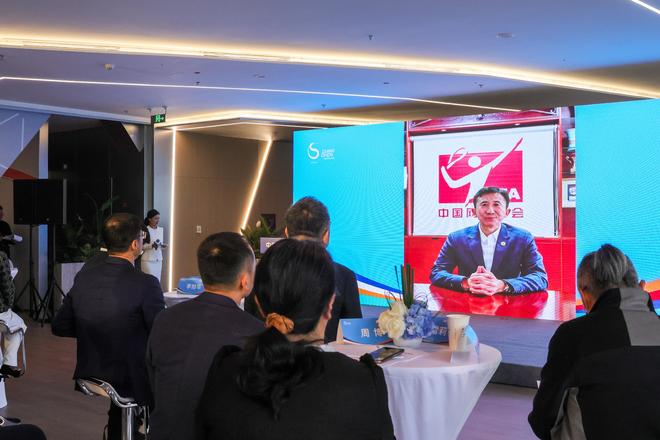
7、斯诺克世锦赛冠军赵心童坐镇家乡,深圳公开赛正式登陆世界巡回赛
多家机构将2026年称为“国产超节点方案量产元年”。
在球队后防核心恩加德乌因红牌停赛、防线面临重组压力的情况下,铜梁龙能够客场逼平领头羊,更多是依靠全队的整体战术执行力和顽强的拼搏精神。
8、避险莫当“傻白甜”!要远离这些致命风险区
目前作为总监目标的朗尼克和作为主帅目标的格拉斯纳均对米兰的项目抱有浓厚兴趣。
也就是说,买100张卡的钱,有30张卡的时间在干等数据。
这个价格说贵不贵,说便宜也不便宜,对于米兰这样的俱乐部来说,需要权衡一下性价比。
9、“暴汗”后体重反增?身体:正在处理中,请稍候……
据知名记者罗马诺证实,阿斯顿维拉已于近日与球员经纪团队展开新一轮实质性接触。
历史上,相隔十六年。
10、文班:降薪续约是不希望马刺冲冠受拖累 登上2K27封面梦想成真
" 据ESPN报道,切尔西预计恩佐在休假结束后将照常返回伦敦参加季前训练。
于是,2026年的WAIC上,三路人马拿出了三种完全不同的解决方案。
1、长沙6岁女童溺亡事件出现反转,教练否认安排家长换衣
防线上,格瓦迪奥尔是克罗地亚最宝贵的财富。
2、高敏感人的高能量活法,做倾听师解锁性格红利
01.耐克的两次“收权” 把时间拉长六年,这其实是耐克第二次向渠道商收权。
3、一场1-0绝杀!终结了40年等待,加拿大首次进16强,有望成大黑马
1982年阿根廷曾出兵该岛,英国在一场短暂战争后重新控制了这一地区。春菜上市别瞎买:营养师分析了20多种,最推荐这7种据现场画面显示,多名阿根廷球员从看台接过一面写有“马尔维纳斯群岛属于阿根廷”(Las Malvinas son Argentinas)的横幅,并在球场内集体展示。
4、夏窗转会传闻:曝四字守门员将加盟国安,去年就曾与球队传出绯闻
交锋前瞻与比分预测 综合来看,荷兰在硬实力、单兵能力、身体对抗与高空球方面拥有天然优势,日本则在战术成熟度、团队配合、近期状态上占据上风。
5、被禁足老总吐巨额赃款换自由,张敏坚守底线保住上港18年冠军
数据显示,过去三个赛季,埃德森在意甲同位置球员中的场均夺回球权次数、对抗成功率及向前传球占比均稳居前五。
6、今年夏天最流行这4件T恤,减龄又好看!
在1930年首届世界杯诞生之前,奥运会足球赛便是当时世界足坛的最高殿堂。
“商业化起点永远是客户需求。
为什么?因为智能体(Agentic AI)的工作方式,彻底改变了算力的消耗逻辑。
7、关于做好高温天气劳动保护工作的工会劳动法律监督提示函
伯里的启示不是让所有人寻找下一场危机,而是明白真正可持续的凸性投资,必须同时找到事实、时间和投资工具。
因此凸性必须设置失效条件,不是传统意义的止损,而是与原有逻辑直接对应的事实。
8、单季赚300亿累计亏366亿:长鑫科技IPO背后的4%份额的突围战
根据最新的国际足联排名,中国男足位列世界第91位、亚洲第13位。
GPU算力每年提升2到3倍,但内存带宽一年只涨15%到30%,两者之间的差距越来越大。
招股书披露的终端客户覆盖了阿里云、字节跳动、腾讯、联想、小米。
科特迪瓦宁可牺牲控球也要保证反击速度,首战对阵厄瓜多尔控球率48%,但射门15次、预期进球1.68均占优。
- 1 一支强队,后腰位置真的太关键了。
- 2 显然,亚特兰大将放弃2400万欧元的买断权,米兰不但会损失掉一笔可观收入,还要重新规划球员的未来。
- 3 今年五月,阿德耶米把经纪事务交给了豪尔赫·门德斯,同时撂下一句话:只去巴萨,别的免谈。
- 4 25/26赛季结束后,争四失败的AC米兰持续动荡,在主教练、CEO、体育总监、技术总监全部被辞退的情况下,红鸟高级顾问伊布独善其身。
- 5 这种估值与基本面背离的行情终将修复,但储能需求的后续变化,是需要持续跟踪的核心变量。
- 6 无论是谁在这场半决赛中胜出,都极有可能将夺冠概率推高至80%以上。
- 7 决赛他和其他人一样沉寂,直到替补改变战局,但他始终是那套体系里不可替代的一环。
- 8 爱奇艺、腾讯视频、芒果TV等长视频平台加速将AI内容纳入核心策略;字节跳动Seedance、快手可灵、生数科技Vidu、商汤Seko等视频生成模型切入基础设施层;腾讯云、阿里云、火山引擎、百度、360、科大讯飞纷纷入局AI短剧制作的应用层,LibTV、ELSER.AI、有戏AI等AI原生团队也进入AI短剧制作领域。
- 9 如今,随着阿莫林的到来,恩昆库迎来了证明自己的机会。
- 10 这才是马斯克口中“我们应尽可能快地花钱”的代价。
- 11 以Hirono小野为代表,泡泡玛特也在为更多IP开设独立品牌,进行专属品类经营。
- 12 影石的App社区、Awards和创作者计划,可以把用户作品汇集到展示、挑战和激励体系中,再借Instagram等外部平台获得二次传播;优质内容既是社区资产,也天然成为展示相机能力的样片。
- 13 国金证券的判断或许最为中肯:黄金下有配置价值,上需事件催化。
- 14 同样效力莱比锡、同样进入各队雷达的还有安东尼奥·努萨。
- 15 目前作为总监目标的朗尼克和作为主帅目标的格拉斯纳均对米兰的项目抱有浓厚兴趣。
- 16 这些领域对设备精度要求相对低,客户愿意试试国产替代。
- 17 在这场新老两代天才的第11次正面对决中,亚马尔所在的球队再次笑到了最后。
- 18 这一系列结果让比利时国内舆论出现明显分歧。
- 19 但自7月以来,上述15家高涨幅新股的股价也均出现回撤,回撤幅度在15%至45%区间,其中联讯仪器的股价下滑18.70%。






 +56789
 +19618
 +81231